Himalayan bee bread (perga), 50gWild Himalayan Ambrosia – Bee Bread Perga
This is the true WILD fermented bee pollen aka 'bee bread perga, Ambrosia - food of the gods...' from the Indian Himalayas National Park by wild bees from pristine nature.
The supplier is the only one in India to have obtained a national license for regulated wild harvesting in a protected landscape area. A fresh complex superfood of exotic bee alchemy, unparalleled anywhere. The best food storage technology of today - MIRON violet biophotonic glass! The collection of wild bee bread from these bees is carried out by special traditional hunter-gatherers of wild bee products. This is the highest and rarest quality of wild Ambrosia (from the virgin Himalayan areas of the National Park) that I have been able to find in the world for our customers, myself, my family, and other demanding clients in the EU. I am fully aware that it is available to only a few people in terms of price and ethics. Its very limited and valuable quantity and source naturally fluctuate, so it is certain that it will occasionally be out of stock and/or the price may change depending on the availability of sources in the East.
- Fermented bee bread — It has several times higher bioavailability than bee pollen.
- Exotic superfood — Contains many times more nutrients for the body.
- Traditional harvest — Collection is carried out by special traditional hunter-gatherers.
- MIRON violet glass — The best food storage technology of today.
Package contents - 50, 100g, 250g or 500g (depending on product variant) - always in a violet glass container
VAT included · Free shipping on larger orders
Key benefits
Fermented bee bread
It has several times higher bioavailability than bee pollen.
Exotic superfood
Contains many times more nutrients for the body.
Traditional harvest
Collection is carried out by special traditional hunter-gatherers.
MIRON violet glass
The best food storage technology of today.
Wild Himalayan Ambrosia - Bee Bread Perga
Wild ambrosia is a 100% natural, fully whole food - a product of the most incredible kingdom of natural products in the world - the Beehive. It is pure local floral pollen, specially processed by bees directly in their hive. Just as humans ferment kefir or prepare sourdough for bread making, bees purposefully leave their pollen to the mercy of a natural fermentation process, during which very important substances are formed without external intervention.
Pollen is a product of the male reproductive organs of plants (stamens), serving to pollinate the maternal organs (or female plants). Bees collect pollen mainly from the flowers of entomophilous (insect-pollinated) plants, where they bundle it and carry it to their community using pollen baskets (on their limbs). It has a protein character and is the most important component of bee nutrition. It is indispensable in the development of bee brood, the nourishment of young bees, and as a component of royal jelly in feeding the queen bee. Without quality pollen, a bee community degenerates and dies. Bees store pollen in special combs in their hive.
There are only 2 superfoods that never cease to amaze us and are probably the most interesting carriers of nutrition in the world. The first, in relation to humans, is of course human breast milk, and the second is Ambrosia - the bee's alchemical creation. In well-known Greek mythology, there is a legend that the Olympian gods drank nectar, a drink of eternal beauty and health (honey and water), and ate so-called Ambrosia - the food of the gods (bee "bread"/comb), preserving their immortality, strength, and eternal youth. If anything is Ambrosia, it is fermented bee bread. It has been known, used, and revered for millennia by cultures that, despite ancient times, were in many ways more advanced than today's humans.
However, never confuse fermented bee bread with bee pollen - even pollen itself is sold and used as an incredible superfood, but bee bread has several times higher biological availability, is practically 100% absorbable, and ultimately contains many more nutrients for the body. Bee bread is essentially an "alchemical" creation of bees made mainly from about 25% honey/nectar of flowers, 70% flower pollen, and bee saliva and specific substances, which together with a wide range of natural probiotic bacteria and yeasts have everything needed to initiate the basic act of fermentation and cultivation. In the hive, bees tightly pack pollen into small cells and precisely mix it with the other mentioned components, finally sealing the cell with wax and starting the fermentation process. After several weeks, a great magical transformation occurs, resulting in the "bee bread" - Ambrosia.
Ambrosia - Bee Bread History:
The products of bee alchemy, used by humans throughout the ages, are of course older than his written history, but even that dates back to 2450-2100 BC, where honey was mentioned in Sumerian and Babylonian cuneiform writings, the Hittite code, Egyptian hieroglyphs, and the Rigveda. A much older cave painting depicted above, referred to as the "Man of Bicorp," is often cited as the very first recorded evidence of ancient wild beekeeping history. It is believed to have been painted by Epipaleolithic people about 8,000 years ago (experts disagree, and some estimate up to 15,000 BC). It was discovered in 1924 by teacher Jaime Garí i Poch among other depictions of important aspects of our ancestors' lives, such as hunting and ceremonial dance, showing how culturally significant bees were even then. Studies have shown that the peoples in the Bicorp area at that time were typically nomadic hunters, gatherers, unable to cultivate grains, which in other cultures of the time already formed the basic carbohydrates of the general human diet. This meant that although they did not engage in beekeeping as we know it today (because it did not yet exist), wild-harvested bee products from natural nests were an important source of energy with very high nutrient density for them. This provides a logical reason why the act of wild honey gathering was immortalised in ancient cave art along with other events of greatest significance in the lives of these early people.
Why did we choose Ambrosia from the pure nature of the Himalayas and not from Czech beekeepers?
Domesticated bees cared for by beekeepers often eat sugar instead of their own honey, are commonly treated with artificial substances, suffer from increased stress, parasites, and diseases, fly in areas affected by agricultural production (around fields and flora sprayed with pesticides and other chemicals) and/or on cultivated and otherwise hybrid plants (including GMOs), all of which disrupts beneficial bacteria and microbiology both in the hive and their products to some extent. Wild bees, nesting high on tall trees and rocky cliffs of the untouched landscape of the National Park in India, however, know none of these disruptive factors and are therefore very strong and healthy - their products extremely potent and all the more nutritious, especially bacterially (strong probiotic and prebiotic composition). Their exotic bee alchemy is thus not only a source of specific phytochemicals and substances of unique local flora but especially an undisturbed load of friendly bacteria and antioxidants.
Harvesting Bee Bread from the Pure Nature of the Himalayas:
The collection of wild bee bread from these bees is carried out by special traditional hunter-gatherers of wild bee products. It is the highest and rarest quality of wild Ambrosia (from the virgin Himalayan areas of the National Park) that I have been able to find for our customers, myself, my family, and other demanding clients in the EU. I am fully aware that it is only accessible to a few people, both in terms of price and ethics. Its very limited and valuable quantity and source naturally fluctuate quite a bit, so it is certain that it will occasionally be out of stock and/or the price may change depending on the availability of sources in the East.
Gathering Ambrosia and honey from Apis Dorsata is an unimaginably dangerous and demanding task due to the location of the nests. Illustrative images show Wild Bee Product Hunters at work on cliffs and giant trees - for a partial idea.
Even today, only traditional methods with rope ladders and bamboo poles and/or climbing skills combined with smoking on very tall trees dotted with giant Apis Dorsata nests are used on the cliffs.
Wild bee products are extremely valuable. Their collection is incredibly challenging - strong nests must be found in the wild and the necessary items must be taken from them with precision. Usually, honey (Asia) is collected, which in its wild and raw form has a very high price (in some places up to 250 euros per 1kg) and in some countries, due to the local flora, also very interesting variations of effects (e.g., strongly hallucinogenic in the so-called mad honey from Nepal or otherwise psychedelic in various special Russian honeys, etc.).
Here, however, we will focus directly on this wild Ambrosia from the species of bees Apis Dorsata from Asia, also known as "Giant Honey Bees". Apis Dorsata has never been domesticated, is larger than European bees, and is a wild defensive species. In the case of this particular bee product, it is wild Apis Dorsata from a national park in the sub-Himalayan region of India Arunachal Pradesh.
Nutritional value and composition of fermented bee pollen - ambrosia
Bee bread is one of the oldest "food supplements" in the world. It is certain that if dietitians used all existing research and possibilities and decided to create the perfect food supplement, something very similar to bee bread would emerge. However, like breast milk, it still contains many undefined substances even today. The future may reveal even more about this miracle over time...
An enzyme can be defined as "the principle of life in the cell" - Without enzymes, life would be impossible. Bee pollen contains every nutrient needed to create living cells. They contain thousands of types (major and minor) of important enzymes and coenzymes! This is many times more than any other food on this earth. Enzymes in the body are not only important for the continuous regeneration of blood, tissues, organs, and bones, but also for proper digestion and maintaining all life processes and homeostasis.
Bee bread is the most complete food in nature. It contains ALL vitamins (especially all B-complex vitamins and vitamin C, which are water-soluble and should therefore be taken daily). Bee pollen also contains vitamins D, E, K, and beta-carotene (provitamin A), 22 amino acids, 27 minerals (including amounts of calcium and phosphorus in an ideal ratio of 1:1, magnesium, zinc, copper, and iron), trace elements, and as already mentioned, an incredible abundance of enzymes. It contains over 90 known nutrients including all essential ones.
Bee bread is also a source of purely plant-based vitamin B12 (it is a bacterial substance, so it is never "vegan" but of all common natural whole sources of B12, Ambrosia, i.e., bee-fermented FLOWER POLLEN is the most acceptable source for many alternative diets). Vitamin B12 is relatively difficult to obtain, especially for orthodox vegetarians, vegans, and some strict macrobiotics. Linoleic and linolenic acids are essential fatty acids that the human body cannot produce on its own. Bee pollen contains these acids and vitamin B12 in relatively large amounts. "Bee bread" is a vital food for the swarm precisely because of its immense nutritional density.
Numerous nutritional benefits are further cited in Egyptian and Chinese native texts.
Various Indian tribes used forms of pollen as natural "magic and spells" of shamans for healing (simply a nutritious elixir).
Russian scientists, who conducted many studies on bee products together with Romanian and French scientists, confirmed that Bee Bread contains "everything necessary for the human organism to survive". It is thus a perfect whole food. A Russian study that surveyed over 100 Russian centenarians in the Caucasus region about nutrition, age, and occupation found that most of them worked as beekeepers and almost all regularly consumed honey and perga.
Old Vikings carried honeycombs and bee bread with them on long journeys and into battles.
Even Spanish Jesuits knew about the use of bee bread during the Inca, Maya, and Aztec periods - they used it as a means to support "all levels of the body." Most prehistoric cave paintings of wild bee product gathering were found in Spain. Many others were found in India and Africa.
* According to Information from the *American Apitherapy Society*, bee bread/pollen is used by almost every Olympic athlete today. *
Ambrosia has the following health claims approved according to COMMISSION REGULATION (EU) No 432/2012 (of 16 May 2012), which applies from 14.12.2012: Bee pollen (Apis Pollenus) - antioxidant, normal cardiovascular system function - blood lipids, natural defences - immune system, appetite, immunomodulation - enzymes and vitamins
-Dr. G.J. Binding, a British scientist and world-renowned nutrition expert, says: "Pollen is the finest, most perfect food and moreover a gigantic microbe killer, in which bacteria simply cannot exist. This is related to a brief summary of some findings by Dr. Remy Chauvin and his associates from the Bee Breeding Institute, Paris: The antibiotic extracted from bee pollen was found to be very effective. Certain cultures, especially typhoid types of microbes, were killed almost immediately by the bee pollen extract.
Composition
Ingredients INCI:
Wild perga, also known as "bee bread", is 100% natural bee-fermented nutrition from the honeycomb of a bee nest, composed of flower pollen, honey, and specific substances added directly by bees)*.
*from the wild nature of wild bee nests (not from a beekeeper's hive)
Preparation and Use:
Exact nutritional values cannot be determined without analyses for a natural product of this type and are variable according to natural influences. On average, Ambrosia contains about 20-30% protein, 30% carbohydrates, and 2% lipids. These macronutrients are so bioavailable that they far exceed the amount needed for the same nutrition from another food. For this reason, it is not recommended to eat large amounts of bee bread at once - firstly, it is completely unnecessary because the body gets enough from a small amount, and secondly, it is literally an overdose of nutrients. A larger amount of residual wax in Ambrosia could also irritate the stomach if not spat out when consumed in high amounts at once (note, Apitherapy does not fully agree with this, some experts claim that consuming wax is actually very beneficial and acts as a prebiotic). It is best to eat Ambrosia in small doses several times a day.
Natural bee product, veterinary goods. Approved and verified by the Czech border veterinary service. With health certification for human consumption and complete analysis for pathogens, heavy metals, microbiology, and moulds.
Storage:
Store in a dry and cool place (for longer shelf life in the refrigerator). Keep in this special added biophotonic Miron packaging. The unique property of this violet glass is that it blocks the passage of the visible spectrum of sunlight from blue to red (450-720nm), yet allows the passage of ultraviolet and violet (380-420nm) and infrared frequencies (720-1050nm). Thanks to this unique combination, sensitive substances stored in violet glass are highly protected from decomposition by the visible spectrum of light and at the same time, their stimulation and bioenergy supply are enabled thanks to the soft part of ultraviolet radiation (UVA) and IR frequencies (penetrating infrared light provides energy, while violet and ultraviolet frequencies stimulate active substances). Substances stored in this packaging thus best retain their maximum quality and effectiveness for a long time.
Storage:
not specified, apitherapy commonly recommends a range from 1 granule of this bee pollen perga to several teaspoons - according to individual needs and tolerance. Always start with a small dose of 1 or a few pieces of perga and gradually increase according to individual nutritional needs and sensitivity.
Country of Origin: India
Collection Location: National Park of India and forests at the foothills of the Indian Himalayas
Warning:
Not suitable for individuals sensitive to bee products. Increased caution is required in consumption for all pollen allergy sufferers and those sensitive to honey. Bee pollen contains no added preservatives, chemicals, or other artificial substances and is in its 100% complete and natural form.
Manufacturer
Made in the Czech Republic. Distributor: www.AdamRaw.cz, Adam Raw, Metylovice 552, Metylovice 73949, ID: 03452824
Expiry Date:
Minimum shelf life until: stated on the bottom of the package
Package Contents:
50, 100g, 250g or 500g (depending on product variant) - always in a violet glass container
Manufacturer and safety information
Certification & Values
100% Natural
No parabens or sulfates
Cruelty-free
Never tested on animals
Certified
Organic & bio certificates
Sustainable
Eco-friendly packaging
The values we select our range by. Specific certifications can vary per product — see the product description.
Customer experiences
Real customer experiences help describe the texture, scent and long-term feel of the product. Reviews are shown in their original wording.
How we verify reviews
Any customer signed in to their account can write a review; customers without an account can write one via a link we send to the email address of a delivered order. A review that our system links to a delivered order of this product is marked as “Verified purchase”; other reviews do not carry this label. Some reviews marked as “Verified purchase” come from our previous online shop (until 27 August 2026), where likewise only customers who had made a purchase could write a review; we no longer have them matched to a specific order. We check every review against our content rules before publishing it, usually within 24 hours; a positive or negative rating is never a reason for rejection.
How we handle reviewsNo reviews yet
Bought this product? Be the first to help others choose.
You Might Also Like
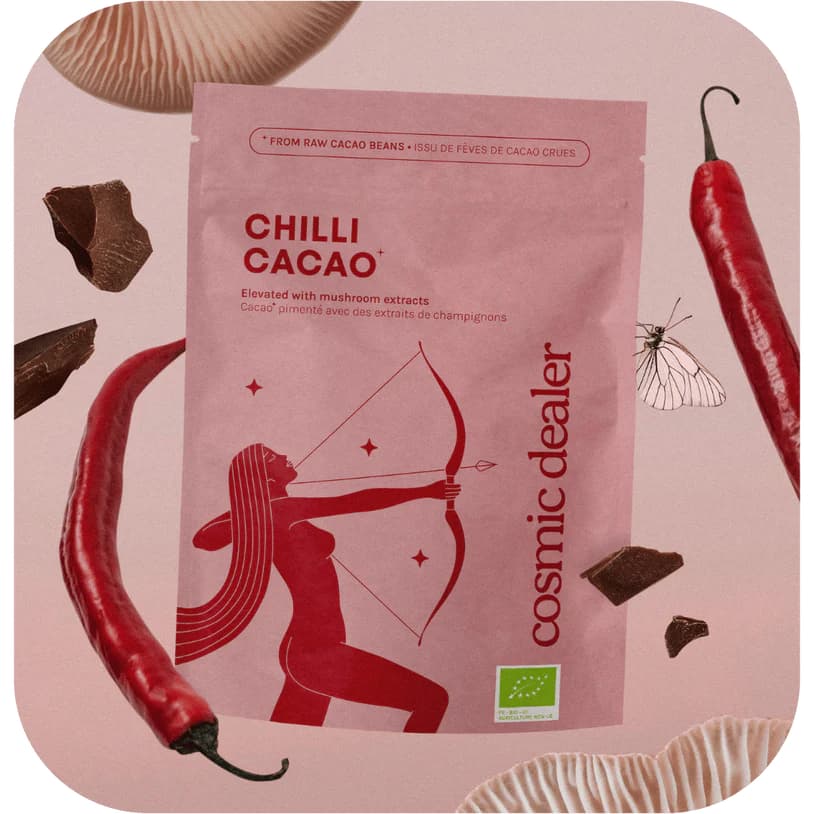
Drinking Chocolate blends - Chilli Cacao
Cacao drink with chilli and functional mushrooms